Local SEO guide: how to get your business first on the Google map
For a local service the decision happens in the map, in the top three. Here is exactly what affects who gets there and the order the work gets done in.
Local SEO6 min readMiloš
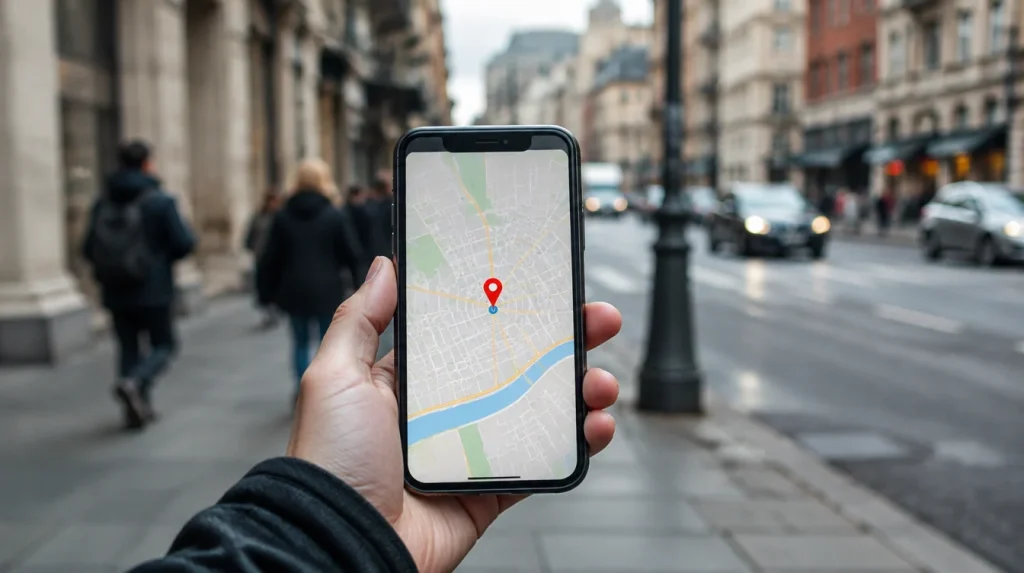
When somebody types "dentist Chorlton" or "emergency plumber", Google shows a map with three businesses first. The fourth gets about a tenth of the calls the first one gets, and the fifth is effectively invisible.
The good news: local search is the fastest part of SEO, and a large share of the competition still does not take it seriously.
The map and the organic results are two separate competitions
This is the first thing to understand. Below the map comes the ordinary list of results, and different rules apply there.
| The map (local pack) | Organic results | |
|---|---|---|
| What matters most | Google profile, proximity, reviews | Content, structure, links |
| How many places | three | ten |
| Speed of results | 3 - 8 weeks | 3 - 6 months |
| Where the work happens | Google Business Profile | on the site |
You do both, because clients get split between them.
Step 1: the Google Business Profile
The single most important item in the whole story, and it is free. Most profiles are half filled in, and that is where the biggest opportunity sits.
The category is the most important field
A wrongly chosen primary category excludes you from half of all searches. Pick the most precise one available, then add every secondary category you genuinely work in.
A practical trick: look at which categories the three businesses currently on the map for your query are using. It is not a secret, it is visible in the source of the results.
Services, descriptions and prices
Every service you offer goes in as its own item, with a description. This is the field almost nobody fills in completely, and Google reads it.
Photographs
Real photographs of the premises, the team and the work. Not catalogue images off the internet. Profiles with pictures added regularly get noticeably more impressions.
A service area if you have no premises
If you work on site and have no place clients come to, the address gets hidden and a service area gets set instead. That is a permitted and ordinary approach, not a way round the rules.
Step 2: consistent details everywhere
The name, address and phone number have to be identical everywhere they appear - on the site, in directories, on social media.
Inconsistency quietly undermines trust in the profile. If you are "Ana Hair Studio" in one place, "Ana Salon" in another, and a third has an old phone number, Google is not certain it is the same business.
Also check whether a duplicate profile exists somewhere - it happens more often than you would think, and it splits the signals across two places.

Step 3: area pages, with real content on them
This is where the work on the site begins.
A search for "hairdresser Manchester" and one for "hairdresser Chorlton" do not return the same results. For every area you genuinely work in, a page gets made - but with content that is actually about that area.
What goes on a page like that: how to get there and where to park, which public transport stops nearby, which of your people work there, opening hours if they differ, and examples of jobs from that area.
What must not: the same page with the area name swapped out. Fifty pages like that is a pattern Google calls doorway pages, and it drops them from the index. This is the most common way local SEO gets ruined in an attempt to speed it up.
How we do it is on our page about local SEO.
Step 4: reviews that come in by themselves
The number, the freshness and the content of your reviews affect both your position and whether somebody calls you.
Set up a process that asks for a review after every job - a QR code on the invoice, a text the next day, a link in an email. The key is to ask immediately, while the impression is fresh.
Two things that are worth more than they look:
- A reply to every review, good and bad. A bad review with a calm, specific reply often persuades more than five five-star ratings with no comment.
- Reviews that mention the service and the area. "They came out to Chorlton within two hours" is worth more than "excellent service". You get that by asking the right question in the request.
Do not buy reviews. Google recognises them, and the penalty hits the whole profile.
What affects your position in the map
Google is fairly open about this. Three groups of factors:
- Relevance - how well your profile matches the query. This gets solved with categories, services and descriptions.
- Distance - how close you are to the person searching. You cannot influence this, but you can choose which areas you fight for.
- Prominence - how well known the business is. Reviews, mentions on other sites, links and organic positions.
Since distance is outside your control, the whole job sits in the first and third groups.
How soon you see movement
- Sorting out the profile - first changes in 2 to 4 weeks
- Area pages - 6 to 10 weeks
- A steady top three position - 3 to 6 months in a larger city, faster in a smaller one
In smaller towns it is noticeably faster, because the competition is thinner and less well optimised.
The most common mistakes
- A fake address in the city centre. Grounds for suspending the profile, and a suspended profile takes months to come back.
- A service area set to the whole country. Too broad an area reduces how often you show where you actually work.
- One page for a whole city. It wins neither the city nor the area.
- A neglected profile. With no posts and no new pictures, a profile quietly falls behind the ones that add them.
In short
Local SEO is the fastest and most cost-effective part of SEO for anybody working with clients from their own city. The profile, consistent details, area pages and reviews - in that order.
If you want to see where you are now and what it takes to reach the top three, book a 30-minute call.